
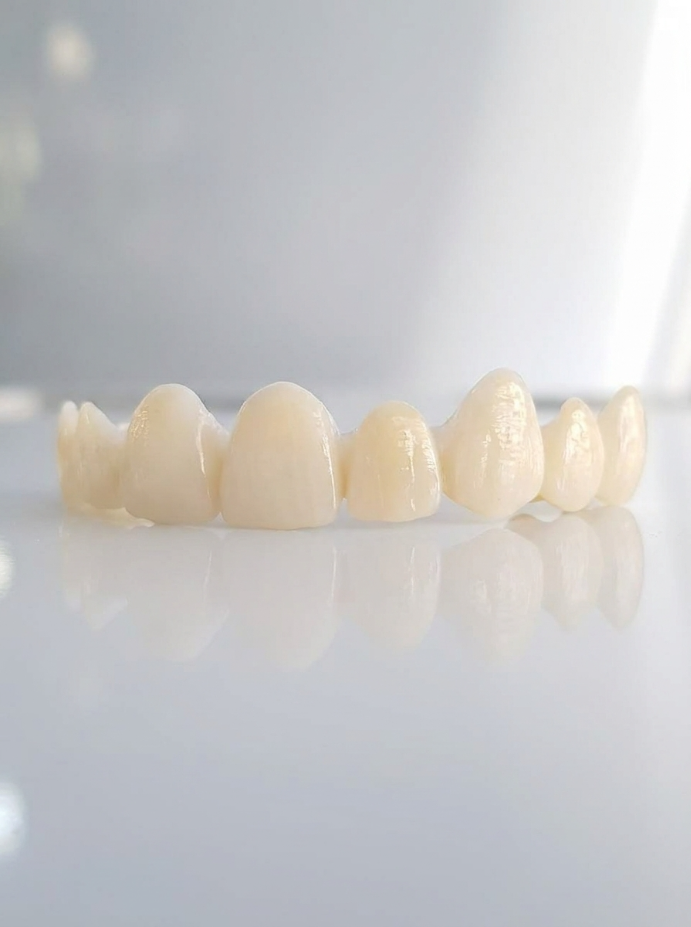
The Challenge of Damaged and Missing Teeth
When teeth become severely fractured from trauma, heavily broken down by extensive decay, or lost altogether, normal daily activities—such as smiling openly during social interactions or comfortably chewing nutritious foods—become persistent challenges.
Modern prosthodontics offers several proven restorative options: individual dental crowns, fixed dental bridges, and removable dentures. Each restoration is engineered for specific clinical indications, structural requirements, and biological parameters. Understanding how they compare empowers patients to make confident decisions alongside their dental specialist.
1. Dental Crowns: Restoring the Strength of a Single Tooth
A dental crown—often colloquially termed a "tooth cap"—is a custom-engineered hollow prosthetic shell that encases the entire visible anatomical portion of a damaged natural tooth down to the gumline.
When Is a Crown Clinically Indicated?
- Following root canal therapy, where a devitalized tooth becomes brittle and requires structural reinforcement against heavy bite forces.
- On a tooth with an extensive failing filling that encompasses more than 50% of the tooth structure.
- To restore a cracked or severely fractured tooth that produces sharp pain upon chewing.
- To cosmetically mask severe intrinsic discoloration or misshapen developmental defects.
Modern Crown Materials:
- Monolithic Zirconia: Milled from solid blocks of zirconium dioxide, these crowns offer extraordinary flexural strength (often exceeding 1,200 MPa), making them virtually indestructible for heavy-grinding posterior molars. Modern multilayered zirconia mimics natural tooth translucency beautifully.
- Lithium Disilicate (E-Max): A high-strength glass ceramic renowned for optical beauty, ideal for front teeth in the aesthetic smile zone.
- Porcelain-Fused-to-Metal (PFM): A classical reliable option featuring a metal alloy framework veneered with tooth-colored porcelain.
2. Fixed Dental Bridges: Spanning the Gap of Missing Teeth
A dental bridge is a fixed restoration designed to replace one or multiple adjacent missing teeth by anchoring permanently onto the natural teeth on either side of the vacant space.
How a Traditional Bridge Functions:
The teeth flanking the gap are termed abutment teeth. These teeth are prepared and shaved down to receive crowns. Connected seamlessly between these abutment crowns is one or more artificial suspended teeth called pontics. The entire assembly is cemented permanently into place.
Advantages of Fixed Bridges:
- Completely fixed and non-removable; it does not slip or click during speech or chewing.
- Fast completion time: typically fabricated and delivered within 1 to 2 weeks.
- Restores full aesthetic appearance and immediate chewing ability.
Clinical Trade-Offs to Consider:
To fabricate a bridge, the healthy protective enamel of the two adjacent teeth must be permanently shaved down—even if they are perfectly healthy and caries-free. Furthermore, a bridge does not stimulate the jawbone beneath the missing tooth, meaning gradual bone resorption will still occur under the suspended pontic.
3. Removable Dentures: Complete and Partial Tooth Replacement
Dentures are custom-crafted removable prosthetic appliances designed to replace multiple missing teeth (partial dentures) or an entire arch of missing teeth (complete dentures).
Types of Dentures:
- Cast Partial Dentures (CPD): Feature a rigid, thin medical-grade cobalt-chromium metal framework with subtle precision clasps that grip onto remaining natural teeth for stability.
- Flexible Valplast Dentures: Made from semi-rigid nylon thermoplastic, offering pink gum-colored clasps that blend into the mouth with zero metal visibility.
- Complete Acrylic Dentures: Supported entirely by suction against the roof of the mouth (palate) and alveolar ridges when all natural teeth are gone.
Who Benefits Most from Dentures?
Dentures provide a non-invasive, surgery-free solution for patients who cannot undergo implant surgery due to severe medical conditions, extensive bone loss, or who desire a fast, non-surgical smile rehabilitation.
Comparative Decision Matrix
| Feature | Dental Crown | Fixed Bridge | Removable Denture |
|---|---|---|---|
| Permanence | Fixed permanently | Fixed permanently | Removable daily |
| Chewing Efficiency | 98% of natural | 90% of natural | 40%–60% of natural |
| Adjacent Teeth Impact | Zero impact | Requires shaving 2 teeth | Minimal clasp contact |
| Jawbone Preservation | Preserves natural root | Bone under pontic resorbs | Bone gradually resorbs |
Conclusion: Customizing the Right Treatment Plan
Every mouth possesses unique anatomical characteristics, bite dynamics, and personal expectations. By consulting with a certified prosthodontist, you receive an in-depth clinical analysis to determine whether a precision crown, fixed bridge, or custom prosthesis is the ideal pathway to restoring your smile.
Medical Disclaimer & Clinical Review
All health content is medically reviewed by certified dental specialists at KGH Dental. Always consult a certified dentist for clinical diagnosis and customized treatment plans.